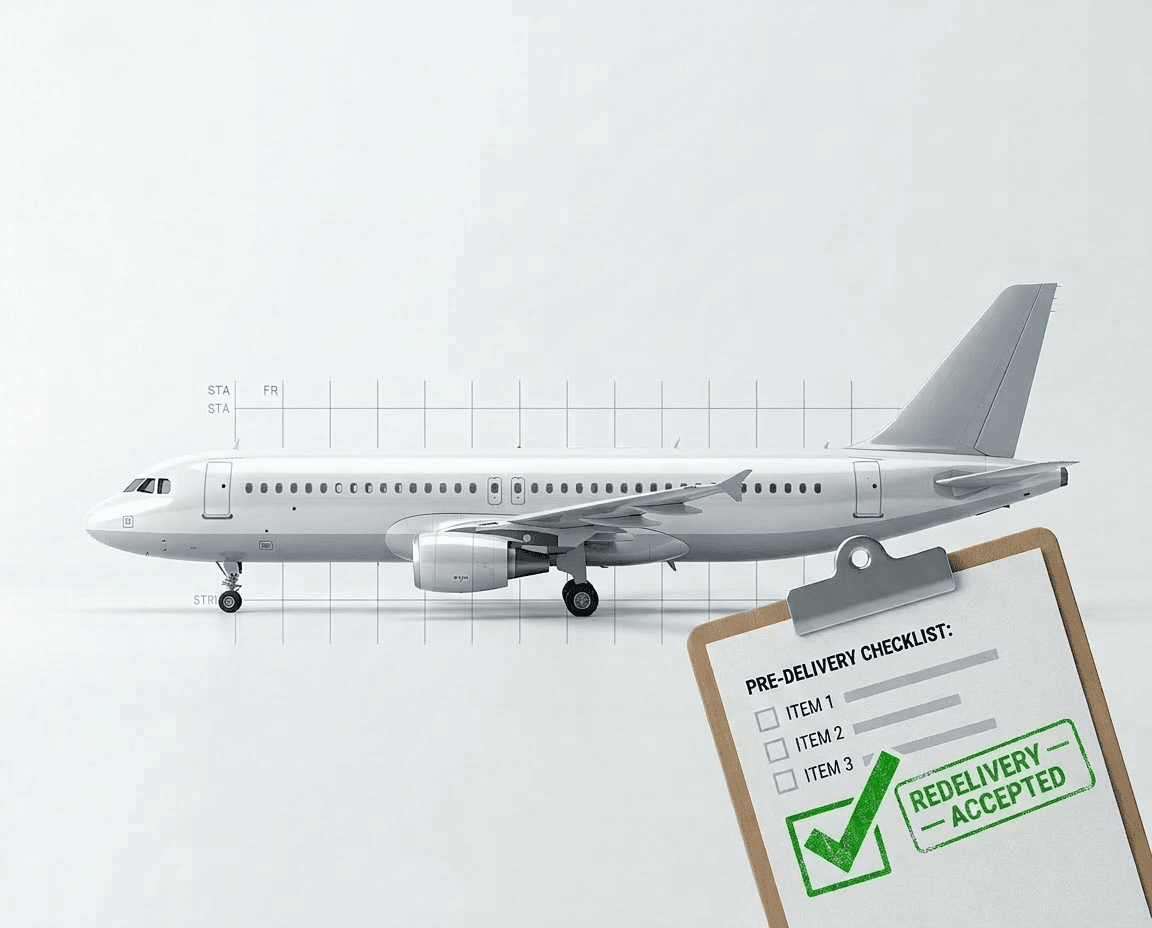

When a lessor’s technical inspector walks the aircraft on redelivery day, they aren’t really inspecting metal. They’re auditing your documentation. Every scratch, dent, doubler, and crease on that fuselage tells two stories: what your records say happened, and what the inspector can actually see. When those two stories don’t match, the conversation stops being technical and starts being financial — fast.
The numbers behind that conversation are not small. Aviation advisory firm mba Aviation reports that airlines routinely spend upwards of $1 million in extra costs on narrowbody aircraft returns to lessors, with widebody overruns easily exceeding that amount by double . For an industry where lessors now hold the titles to over 40% of the global commercial fleet, end-of-lease inspections have quietly become one of the most expensive — and least optimized — events in the entire aircraft lifecycle.
This article unpacks why those disputes happen, where the money actually goes, and how aviation engineering and technical services teams can shut down both — well before the inspector ever boards the aircraft.
The hidden cost stack of a contested lease return
Most operators budget end-of-lease inspections as a single line item: the inspection itself. The real exposure is a stack
of compounding costs that activates the moment redelivery slips.
Holdover rent. When an aircraft fails inspection or paperwork is rejected, the lease typically continues to accrue at the daily rate. For a new narrowbody, that’s approximately $13,000 per day; for a widebody, around $40,000 per day.
Some leases double the rate as a punitive late-return clause.
MRO slot loss. Hangar slots are booked months in advance. A disputed defect that requires unscheduled repair work doesn’t just cost the repair — it costs the next slot, the next operator’s delivery date, and the cascading penalties tied to both.
End-of-lease compensation. Where return conditions are not met, the lessee owes compensation — calculated by actual cost, pro-rated life, market impact, or a contractual formula. The compensation methodology itself is one of the most disputed clauses in aviation leasing.
Legal exposure. When redelivery disputes escalate, they become “challenging, time-sensitive, multijurisdictional issues” — to quote Watson Farley & Williams’ aviation team, who note that lease-return litigation now drives a meaningful share of aviation arbitration activity.
Add it up, and a single contested inspection can quietly cost more than two years of monthly lease payments on the same airframe.
Why dent and buckle records are the most disputed artifact in any redelivery
Lessors care about three things at handback: the aircraft’s physical condition, the integrity of its airworthiness records, and the marketability of the asset to the next operator. The dent and buckle chart sits at the intersection
of all three.
It is, in effect, a forensic timeline of every structural imperfection the airframe has accumulated since delivery. It proves which damage was assessed within Structural Repair Manual (SRM) limits, which was repaired under approved data, and which was inherited from a previous operator. The next lessee will scrutinize it. Their lessor’s appraiser will scrutinize it. EASA and FAA auditors expect it to be complete, current, and consistent with every repair file behind it.
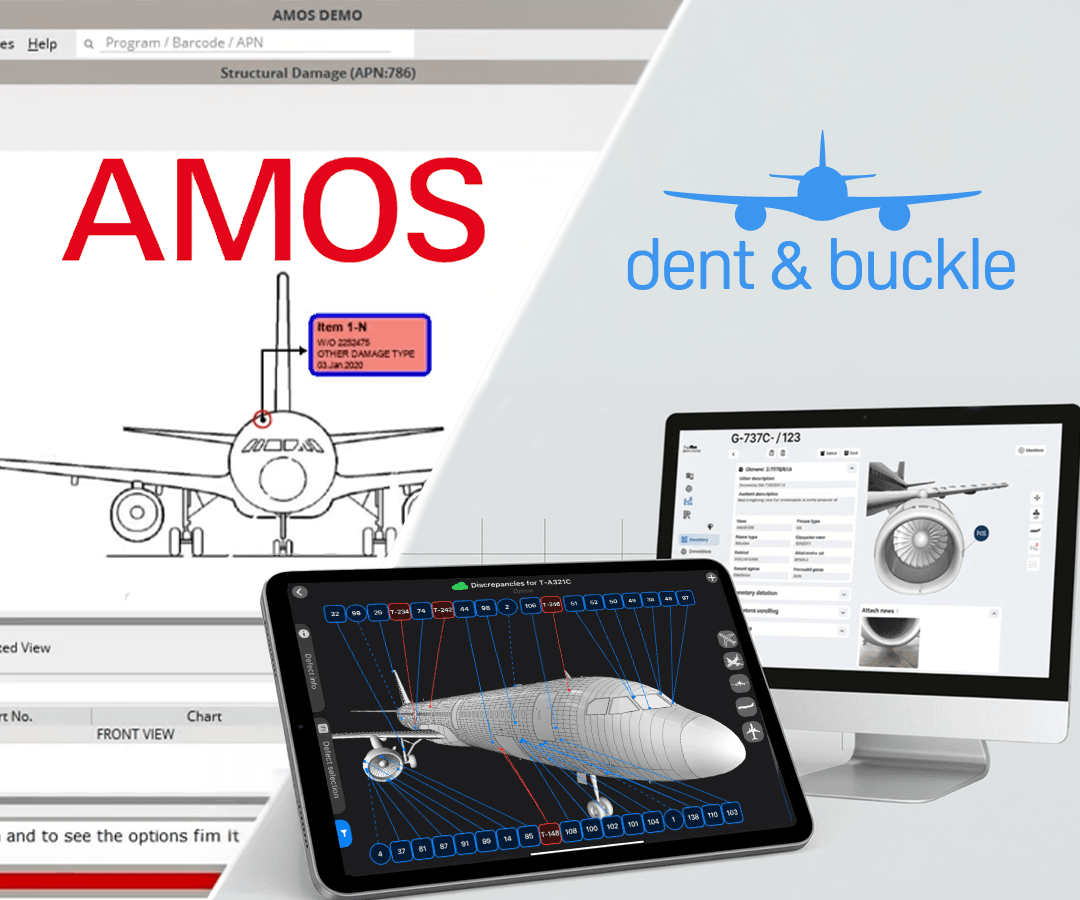
Here is the problem: most airlines are still maintaining that timeline on 2D paper diagrams, on shared drives, or in patchwork spreadsheets passed between line stations.
The failure pattern is well known across the industry. Traditional dent and buckle documentation is a fundamentally human-dependent procedure — and human dependency is exactly where subjectivity creeps in. Fatigue at the end of
a long shift, inconsistent terminology between engineers, ambiguous location markers on a generic 2D template, and photos that were either never taken or never linked to the right entry all erode the record’s reliability over time.
In a dispute, subjectivity is the lessor’s leverage.
Five failure points that quietly create disputes
Across operators we work with, the same five documentation gaps show up again and again in contested redeliveries:
- Damage logged but not localized. A defect noted as “lower fuselage, aft of wing root” is interpretable. A defect logged against precise frame, stringer, and station coordinates is auditable. The difference is whether the lessor has room to argue.
- Repairs not tied to source damage. When a Cat A or Cat B repair appears in records but the underlying dent
or buckle was never properly logged, the lessor has grounds to question whether the repair was performed against approved data — or whether undisclosed damage exists elsewhere.
- Inherited damage without provenance. Aircraft transitioning between operators routinely carry pre-existing damage. If that damage isn’t clearly marked as inherited at the lease’s delivery acceptance, the current lessee inherits the financial liability too.
- Inconsistent records across line stations. When the same defect is described three different ways by three different engineers across three different airports, the lessor’s auditor will choose the version that costs you the most.
- No defensible audit trail. “Who recorded this, when, on what device, from what evidence?” If the chart can’t answer that on demand, it isn’t documentation — it’s allegation.
Each of these is fixable. None is fixable in the final 60 days before redelivery — which is when most operators try.
What a defensible end-of-lease inspection actually looks like
IATA’s guidance and experienced redelivery managers agree on the lead time: 12 to 15 months before lease end,
not 12 to 15 weeks. Some teams puts the records review starting point at 9 to 12 months prior to lease end, specifically because the records — not the metal — drive the cost overruns.
A defensible end-of-lease inspection works backwards from a simple premise: the dent and buckle chart you hand the lessor on day one of redelivery should contain no surprises — for either party.
That means:
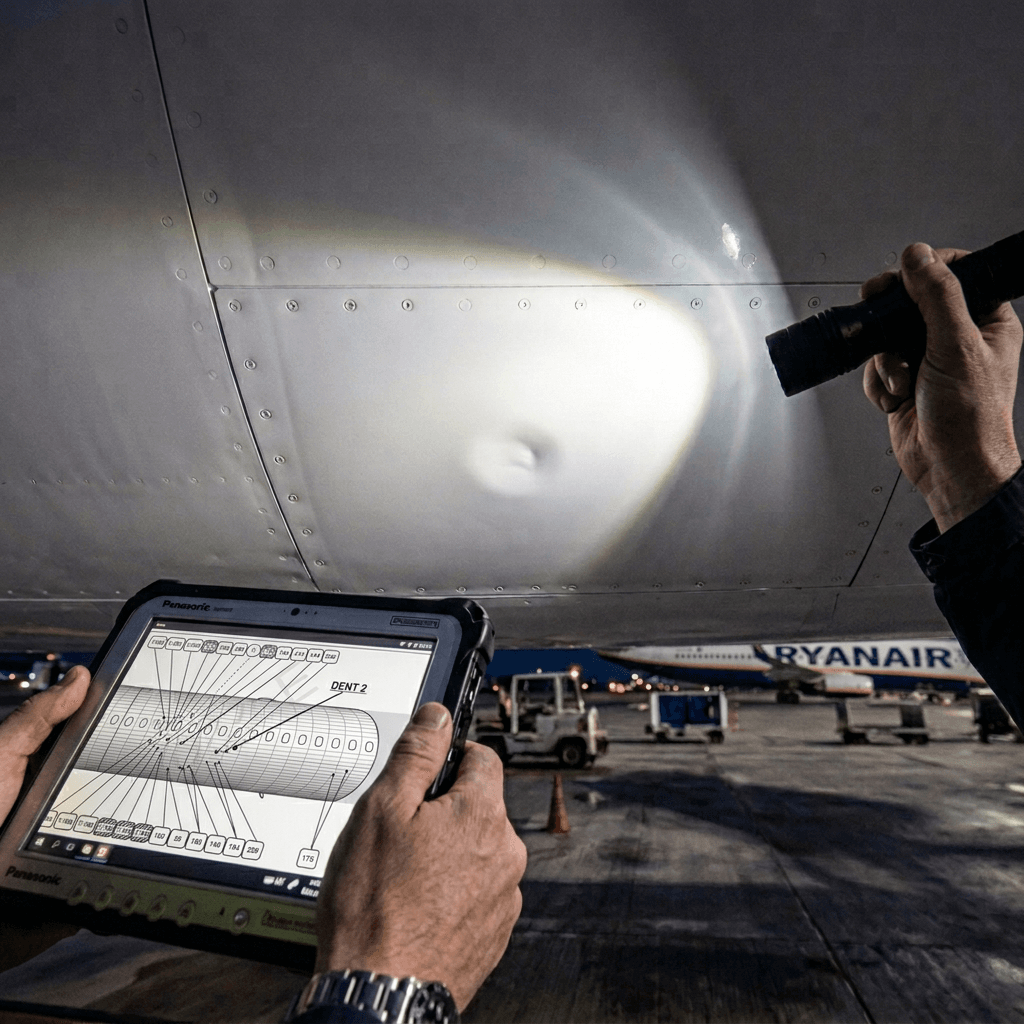
- Every structural defect is logged at the moment of discovery, on the aircraft, by the engineer who saw it — not back-filled at a desk hours later from memory.
- Each defect is anchored to precise 3D coordinates on the actual airframe variant, not approximated on a generic 2D template.
- Photographic evidence, dimensions, SRM evaluation, and Cat A/B/C classification live in the same digital record
as the chart entry — not in three separate systems.
- Repairs auto-link to source defects. Component-mounted damage moves with the component when it’s swapped between airframes.
- The full audit trail — who, when, where, from what evidence — is queryable in minutes, not reconstructable over weeks.
This isn’t theoretical. It’s what carriers like Cathay Pacific now do across 190+ aircraft, having migrated their entire dent and buckle process onto a digital, 3D, cloud-based system rather than maintaining paper charts on board each aircraft.
How Dent & Buckle eliminates the dispute surface
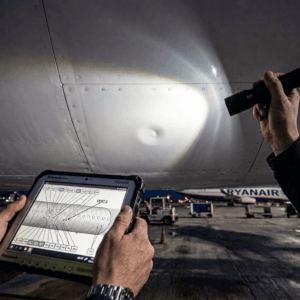
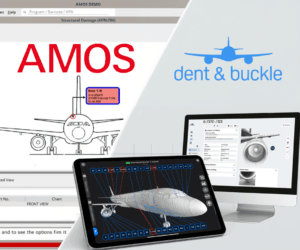
Dent & Buckle was built specifically to remove the documentation ambiguity that fuels redelivery disputes. The platform replaces 2D paper diagrams with component-based 3D models of your actual fleet variants, lets engineers record defects directly on a mobile device — online or offline, in the hangar or on the ramp — and consolidates every dent, repair, photo, and SRM assessment into a single, always-current record stored on your region’s Microsoft Azure cloud.
For lease returns specifically, that means a complete aircraft defect report can be generated in minutes, in a format the lessor and the next operator can interrogate but not credibly dispute. Every entry carries its own audit trail. Every repair is bound to its source damage. Every coordinate is exact. Integration with major MRO systems means the dent and buckle record isn’t a standalone artifact — it’s part of the same airworthiness ecosystem the lessor’s auditor is already reviewing.
The financial logic is straightforward. At a starting monthly cost of $100 per aircraft, the platform pays back its annual fee on a single hour of avoided holdover rent on a single widebody. In practice, operators see the benefit much earlier: roughly half of all defect-management time disappears, freeing engineering hours that were previously spent reconciling records rather than inspecting aircraft.
The takeaway for technical services and asset management teams
End-of-lease inspections will never be risk-free. Lease return conditions are too detailed, lessor incentives too sharp, and aircraft too complex for any process to be frictionless. But the disputes and delays that consume seven figures in operator P&L are not driven by the aircraft. They are driven by the records.
Fix the records — not at lease end, but throughout the lease — and the inspection stops being a negotiation. It becomes a formality.
If you’re scoping a fleet-wide redelivery program over the next 12–18 months, arrange a 60-minute live demo with the Dent & Buckle team. We’ll walk through how the platform handles your specific aircraft variants, model the cost impact against your lease portfolio, and answer any questions your engineering and asset management teams bring to the conversation.